

Carbon fiber maintenance and longevity are the most critical factors for any serious RC drag racing enthusiast today. You invest heavily in high-end kits, so protecting that investment is vital. A pristine chassis doesn’t just look better; it performs with higher consistency on the track. If you neglect your carbon fiber components, you risk structural failure during high-speed passes. This guide covers every essential detail to keep your carbon fiber parts in race-ready condition for years.
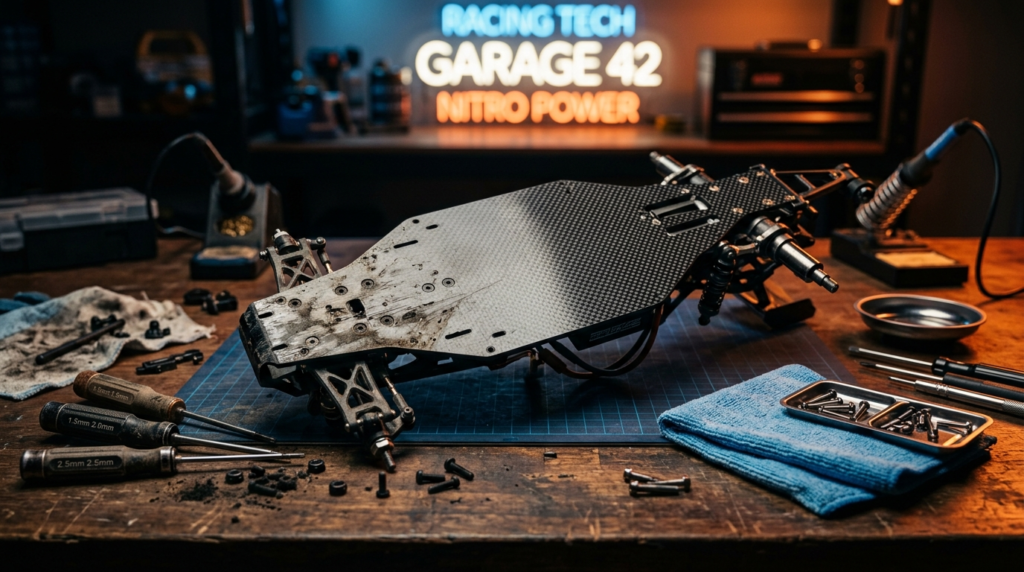
Carbon fiber is famous for its incredible strength-to-weight ratio. However, it is not indestructible. The material consists of woven fibers held together by a specialized resin. Over time, vibration, heat, and impacts can degrade this bond.
To ensure carbon fiber maintenance and longevity, you must understand how the material reacts to stress. Unlike aluminum, carbon fiber does not bend; it shatters or delaminates. Regular inspections allow you to catch these issues before they become catastrophic.
The resin is what gives your chassis its shape and rigidity. Extreme temperatures can make the resin brittle. If you store your car in a hot garage or a freezing shed, you are hurting your carbon fiber maintenance and longevity. Always keep your RC drag racer in a climate-controlled environment to preserve the chemical integrity of the chassis.
Dirt and track debris are the silent enemies of your racing machine. Small pebbles can create micro-scratches in the resin surface. These scratches might seem minor, but they act as “stress risers” that can lead to larger cracks.
Never use harsh chemicals like acetone or brake cleaner on your carbon components. These substances eat away at the resin. For the best carbon fiber maintenance and longevity, use a mild dish soap and lukewarm water. A soft-bristled toothbrush is perfect for getting into the weave of the custom chassis plates without causing damage.
After washing, do not let water sit in the screw holes. Use compressed air to blow out every crevice. Moisture trapped between the carbon layers and metal hardware can lead to oxidation. This process is a core part of professional carbon fiber maintenance and longevity.
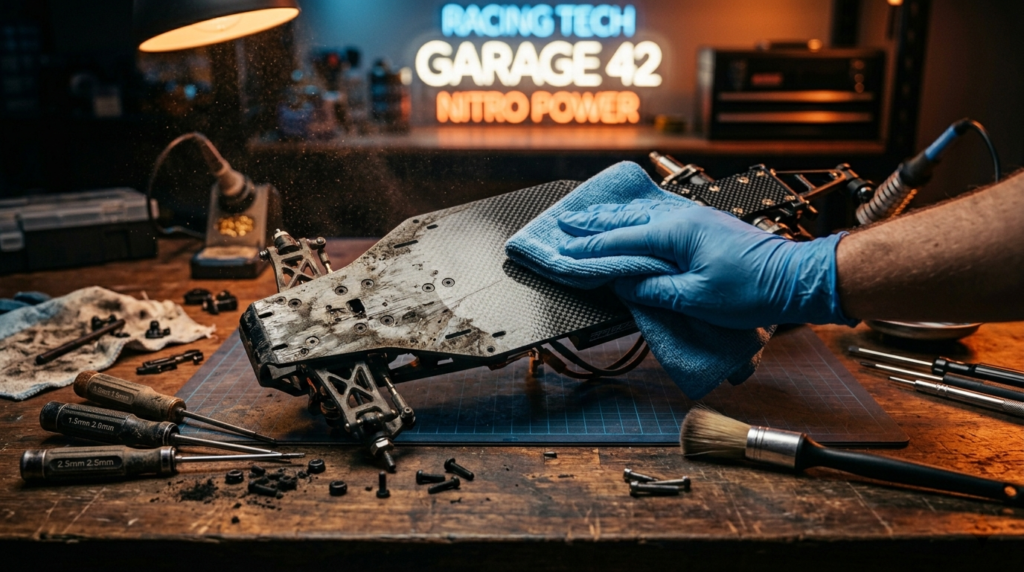
You should inspect your chassis after every race day. High-speed drag racing puts immense torque on the frame. Look for any signs of “clouding” in the resin. This usually indicates that the layers are starting to separate.
Focus your attention on the motor mount area and the shock towers. These spots handle the most physical load. If you notice any hair-line fractures, your carbon fiber maintenance and longevity are at risk. Replacing a single plate is much cheaper than replacing a total wreck caused by a mid-race snap.
Loose screws allow the carbon fiber parts to vibrate against each other. This friction creates “carbon dust,” which is a sign of wear. Keeping your hardware snug is a simple yet effective way to improve carbon fiber maintenance and longevity. However, do not overtighten, as this can crush the fibers.
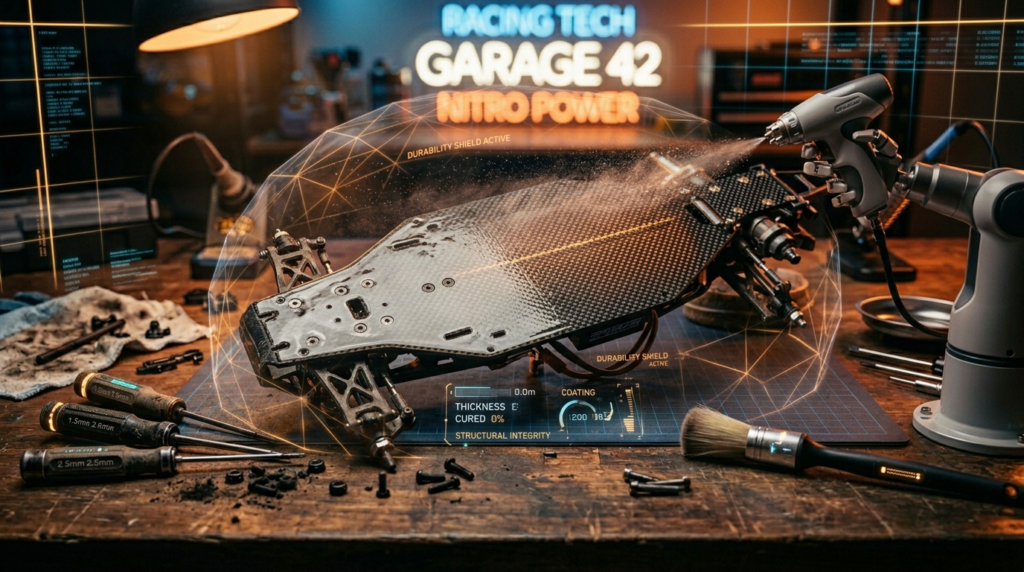
Many pro racers use a “CA glue” method on the edges of their carbon fiber parts. This involves applying a thin layer of cyanoacrylate glue to the exposed edges of the plates. This seal prevents delamination during a crash.
To improve carbon fiber maintenance and longevity, sand the sharp edges of your plates with fine-grit sandpaper first. Once smooth, apply the glue carefully with a cotton swab. This creates a hard shell that protects the woven layers from splitting.
If you race outdoors, UV rays can yellow and weaken the resin over time. Applying a high-quality automotive wax with UV blockers is a great tip for carbon fiber maintenance and longevity. This simple step keeps your chassis looking deep black and structurally sound.
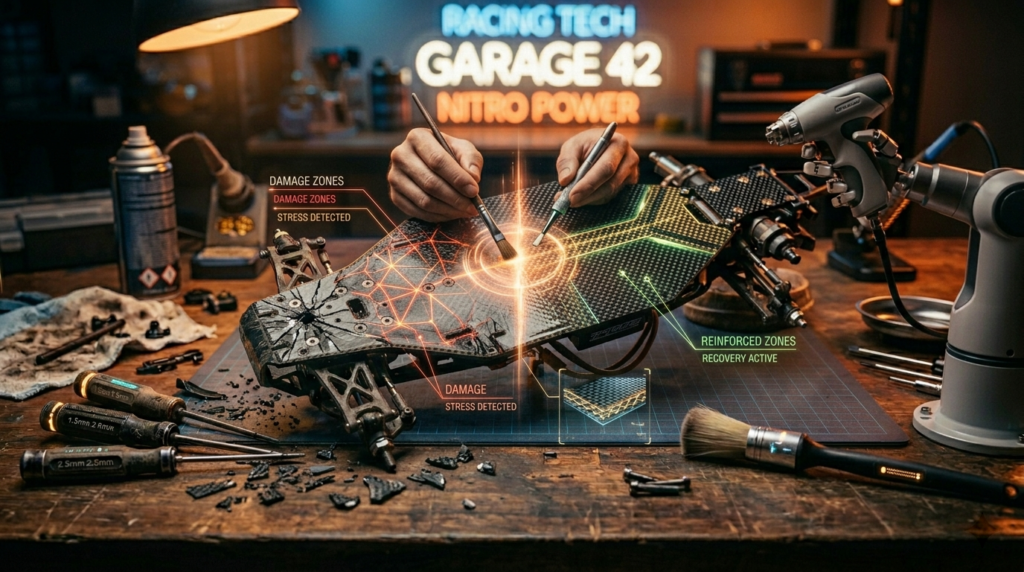
Crashing is part of RC drag racing. When you hit the wall, the energy travels through the entire chassis. Even if you don’t see a break, the internal structure might be compromised.
Strip the car down to the bare frame after a major impact. Flex the chassis slightly by hand and listen for any “crunching” sounds. Any noise indicates internal delamination. Ignoring this ruins your carbon fiber maintenance and longevity, as the chassis will no longer flex predictably.
Safety should always come first. If a piece of carbon fiber has a deep gouge or a visible split, it is time to replace it. Prioritizing carbon fiber maintenance and longevity means knowing when a part has reached the end of its life cycle.

How you store your car between races matters as much as how you drive it. Never leave your RC car sitting on its tires for long periods. This puts constant tension on the shock towers and chassis.
Place your vehicle on a stand so the suspension hangs freely. This relieves the “static load” on the carbon fiber components. Dedicated racers know that this habit is essential for long-term carbon fiber maintenance and longevity. It prevents the chassis from taking a “set” or warping over time.
Keep your spare carbon plates in a flat, padded case. If they are thrown into a toolbox, they can chip each other. Proper storage of spares ensures that when you need them, they are in perfect condition. This is a vital part of a complete carbon fiber maintenance and longevity strategy.
Not all carbon fiber is created equal. High-quality kits use multi-directional weaves that handle stress much better than cheap alternatives. Investing in premium parts from the start is the best way to ensure carbon fiber maintenance and longevity.
A 3K twill weave is standard for a reason. It offers a balance of looks and durability. When you choose your components, look for clean edges and a void-free finish. These manufacturing details directly impact the carbon fiber maintenance and longevity you can expect.
Maintaining your RC drag racer requires discipline and attention to detail. By following these cleaning, inspection, and storage steps, you maximize the life of your equipment.
Remember, carbon fiber maintenance and longevity are about proactive care. Don’t wait for a part to fail. Clean it, seal it, and inspect it regularly. This ensures that when you pull the trigger, your chassis is ready to handle the power. Your path to the winner’s circle starts with a well-maintained machine. Keep your carbon fiber in top shape, and it will take care of you on the track.
© 2026 Supa Media. All rights reserved.
Supa Speed RC