📦 Free Shipping on Orders Over $100! 🕒 Limited Time Offer – Hurry Up! 📦 Free Shipping on Orders Over $100! 🕒 Limited Time Offer – Hurry Up! 📦 Free Shipping on Orders Over $100! 🕒 Limited Time Offer – Hurry Up!
Choosing the right 1/10 scale RC body is the most critical decision for optimizing your drag car’s aerodynamics and track stability. A body shell is not just a cosmetic cover; it is a functional component that dictates how air flows over your chassis at high speeds. This guide breaks down the technical variables you must consider to ensure your selection provides a competitive edge.
Aerodynamic Efficiency and the 1/10 Scale RC Body
The aerodynamic profile of your 1/10 scale RC body determines how much drag the vehicle encounters during a pass. Sleek, low-profile designs reduce the frontal area, allowing the car to cut through the air with minimal resistance. This efficiency is vital for reaching top speeds in shorter distances.
Reducing Frontal Lift
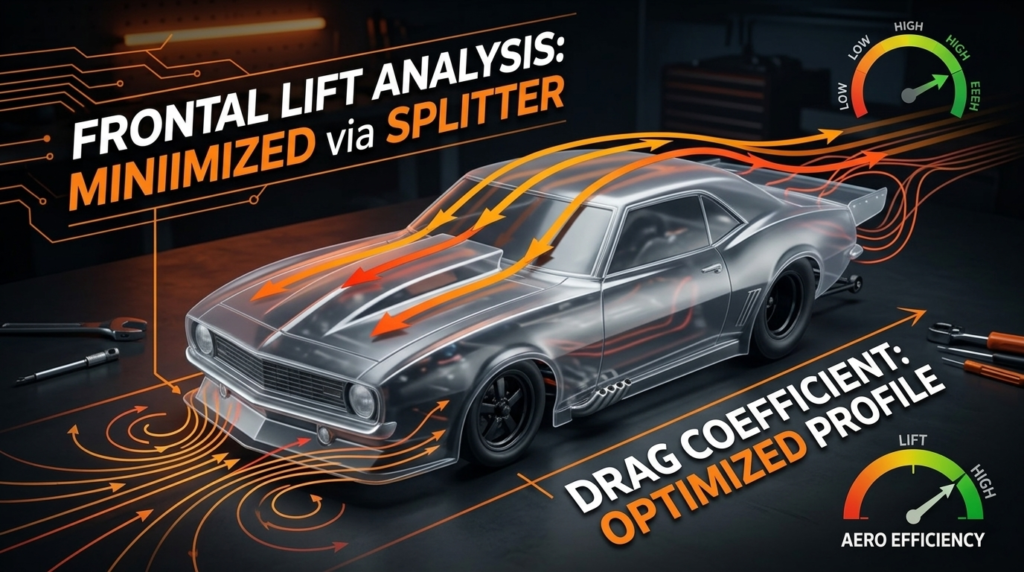
High-speed runs often create a high-pressure zone under the front bumper. Selecting a 1/10 scale RC body with an integrated splitter helps manage this pressure. A well-designed splitter directs air over the hood rather than under the chassis. This prevents the front end from lifting and losing steering authority.
Weight Distribution Effects of Different 1/10 Scale RC Body Materials
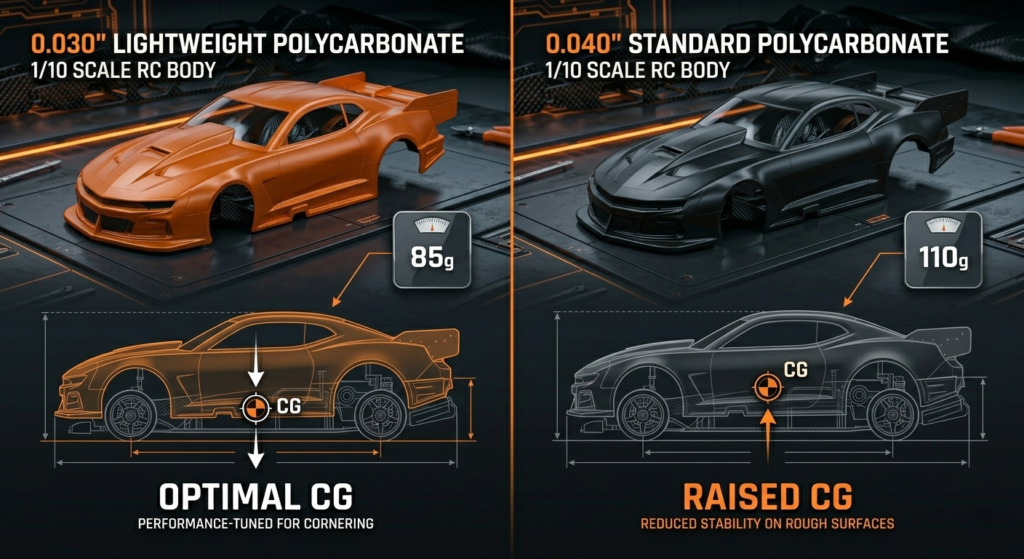
Material thickness significantly impacts the center of gravity and overall weight distribution. Most racing shells use polycarbonate, but the “mil” thickness varies between brands. Choosing a lightweight 1/10 scale RC body reduces the “top-heavy” effect during rapid acceleration.
Impact of Polycarbonate Thickness
0.030″ (Lightweight): Best for maximum speed but offers less structural rigidity at 100+ mph.
0.040″ (Standard): Provides a balance of durability and performance for daily testing.
Reinforced Areas: Critical stress points like body post holes require extra backing to prevent tearing.
Front-End Downforce: Selecting a 1/10 Scale RC Body for Stability
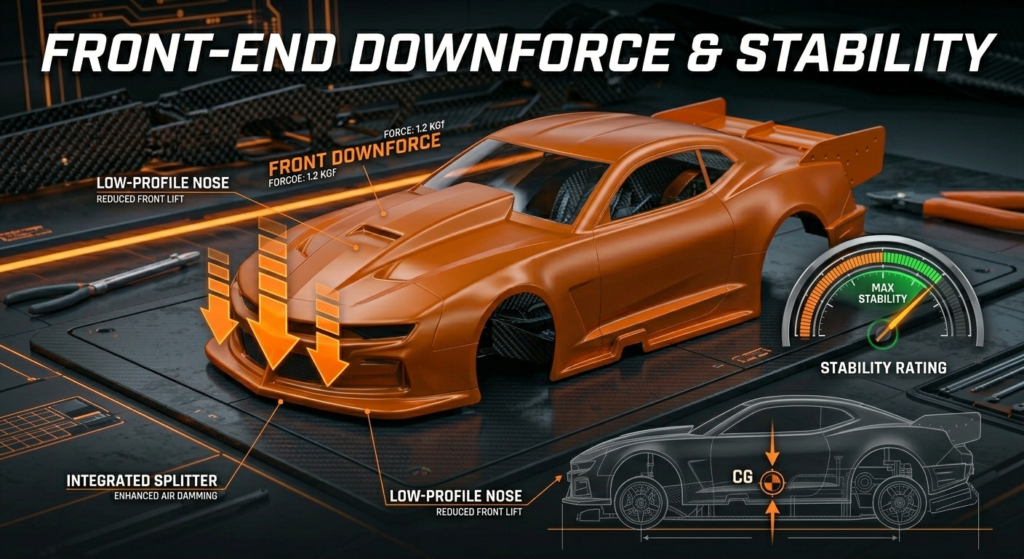
Downforce is the downward force produced by the air moving over the body. When you select a 1/10 scale RC body, you must balance front-end grip with rear-end stability. Too much front downforce can make the car “twitchy,” while too little results in understeer.
Tuning with Spoilers and Wings
Adding an aftermarket wing to your 1/10 scale RC body allows for fine-tuning. A larger rear spoiler increases traction on the rear tires, which is essential for heavy-hitting launches. However, you must ensure the body shell can support the mechanical load of the wing without flexing.
How Wheelbase Compatibility Impacts Your 1/10 Scale RC Body Choice
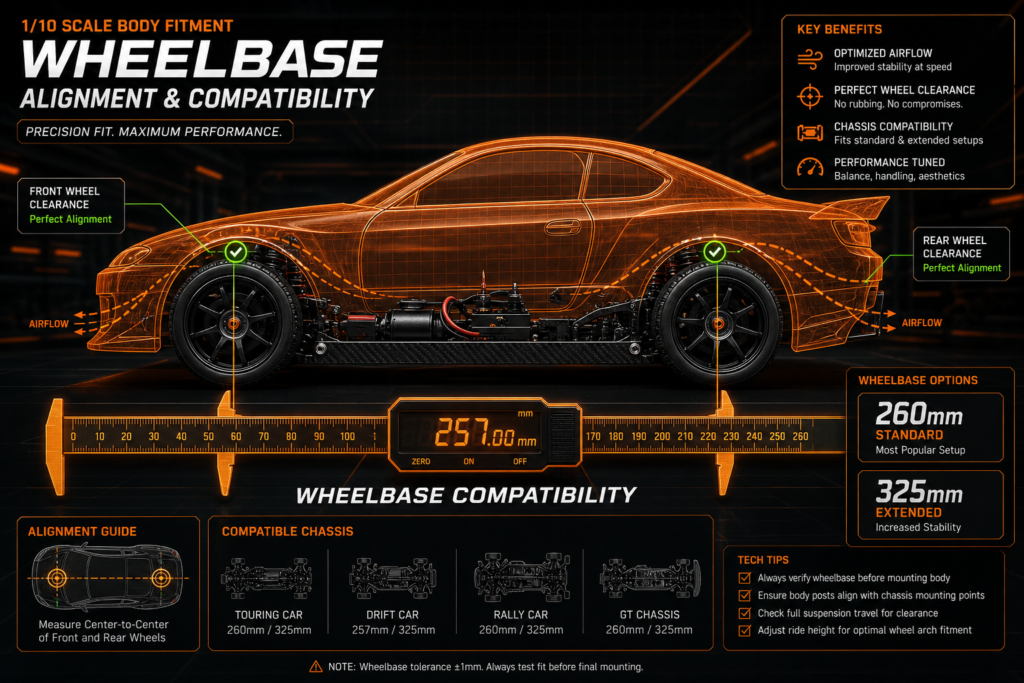
Not all 1/10 scale chassis are identical in length or width. Before purchasing a 1/10 scale RC body, you must verify the wheelbase measurements. A slight mismatch can lead to tire rub, which creates friction and destroys your top-end speed.
Measuring Your Chassis
Measure from the center of the front axle to the center of the rear axle. Most 1/10 scale RC body options are designed for a 260mm to 325mm range. Ensure the wheel arches of the body align perfectly with your tires to maintain clean airflow around the wheels.
Durability vs. Performance in Your 1/10 Scale RC Body Selection
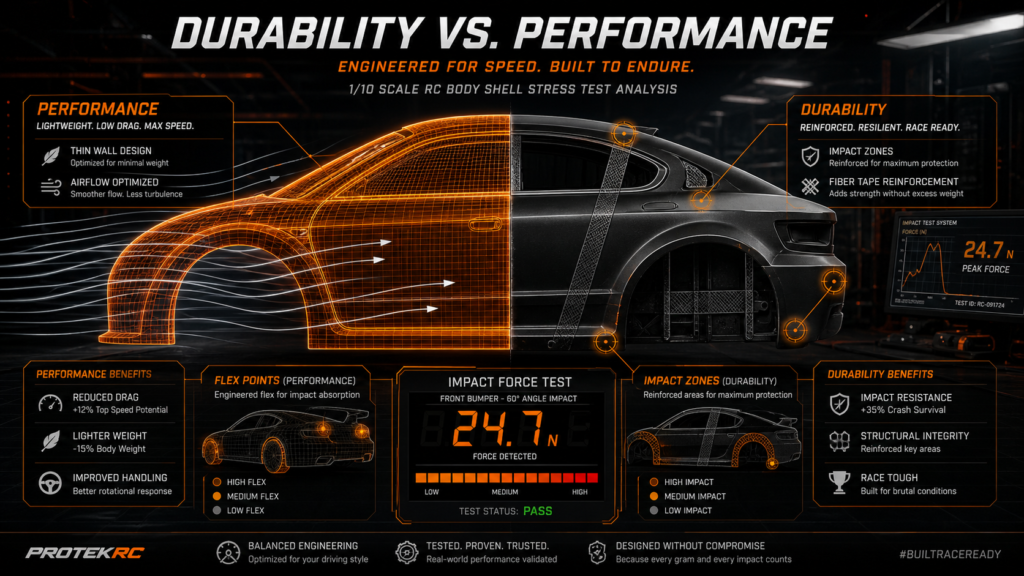
Racing environments are harsh, and crashes are inevitable. A ultra-lightweight 1/10 scale RC body might shave grams off your total weight, but it may shatter upon impact. You must decide if your priority is raw qualifying speed or long-term durability.
Reinforcement Techniques
Applying shoe-goo or fiber tape to the inside of your 1/10 scale RC body can extend its life. Focus on the nose and side skirts, as these areas take the most vibration. Proper maintenance ensures your 1/10 scale RC body remains a reliable part of your racing kit for many seasons.